Indeed, entire ecosystems of trainings (including in electronic warfare systems), integration, support, long-term sustenance and co-assembly arrangements for parts must be on the table. To add, weapon systems of all sorts suited for the peculiarities of the needs of the economically (relatively) fast-growing country in communist China’s near-geographical orbit.
But, the Philippines have an urgent need for a vast array of upgraded and new defensive capabilities from land defense systems, missiles, drones and overall modernization in broad fronts in the capabilities of the Armed Forces of the Philippines and entire national security infrastructure. Moreover, the Philippine government needs to cater to the needs for upgraded and new big-ticket infrastructures to sustain and accelerate economic development and among other urgent needs in the national security, the military logistics capabilities in a country with thousands of islands with a long history of internal conflicts (insurgency, separatism) and many dozens of languages and dialects with some ethnic groups even in autonomous regions having long-standing internal conflicts of their own.
Worse, in one of the largest democracies in the world, income and social security inequality is relatively very high (versus Thailand, Brazil, for example). So this is a dilemma for the Philippines. Overall developmental agendas and government social programs need a boost, to tackle this impediment to tighter social cohesion and resilient political stability in the Philippine society. To add, the required efforts and political risks in pursuing viable, feasible institutional, long-term means and ways to minimize or disrupt extreme greed among many officials in the country, across levels of governance. Recent corruption scandals that hogged the headlines shocked even us who are already so inured to reports of corruption and corrupt practices standard in the many sectors of the Philippine society (yes, not just in the government).
Corruption, if curbed by even a mere small percentage, could have freed, secured funds for purchase of war matériels and pursuit of military modernization
The entire Duterte 2016-2022 administration, had a budget of roughly 26 trillion pesos, or $525 billion (at an average of roughly 49.5 $ to peso exchange rate, in 2022). If overall debt servicing is at, say, the barest minimum of 30%, then only (rounded) U.S. $ 368 remains for everything else. (I’m not an economist, and I don’t need to be, to play around with figures citing conservative estimates here also considering the fact my target readers here are either simple people or very busy personalities to mind near-perfect accuracy.)
So, to deduct a total of roughly bare minimum of 25-27% for personnel services, $275-269 billion, say $270, is the net that I am to use here as reference. For purposes of simplicity, and to simply drive my point here, I stop at this figure of roughly $270 as a base figure for the chunks of the budget subject to corruption, theft of funds, kickbacks and overpricing (which does not necessarily overlap with percentages for kickbacks as contractors would have a near free hand in dictating contract amounts to exploit public officials in their pockets or as their bosses in case of dummy firms, contractors which are so many and in large percentage among contractors).
Now, according to recent revelations in the corruption scandals that hogged the headlines in the recent months, as much as more than 50% of budget, expenditures, for infrastructure projects were or are being lost to theft of funds, including by some of those with constitutional-institutional mandates to safeguard use of these funds. I am more comfortable with, say, 35%, lost to massive, pervasive, blatant corruption, at least for infrastructure projects, overall. According to some reports, the people of the Philippines were robbed of roughly 1 trillion pesos, or roughly $18 billion at roughly $1 to 55 pesos, half of the 2 trillion budget for flood control projects alone, in the last 15 years (according to Senator Panfilo Lacson, Chair of the Blue Ribbon Committee in the Philippine Senate of 24 senators who are nationally elected in the Philippines).
Extrapolation is not always a proportionately reasonable thing to do in many instances. But let me do it here, to drive my point and to establish the basis for probabilities. If at least 40-50% (there re credible reports it goes as high as 60% for some blocks of national, and I add, even local budgets) are being lost to corruption, this translates to at least U.S. $135-162 billion of the entire budget of from 2016 to 2022 alone. Based on this range, on annual average, it’s $22.5-27 billion in that 6 years prior to Ferdinand “Bong Bong” Marcos present administration. For a developing country like the Philippines, with its high Gini Index coefficient being so high and in the top 10 among major developing countries and democracies of the world, higher than neighbor Indonesia with its large Chinese population and far higher than Thailand. If only the Top 50 wealthiest families are compared to the rest of the population, the level of inequality is insane. If remittances of a mere top 10% of more than 10 million Filipinos working in foreign countries are extracted, it should also be much higher.
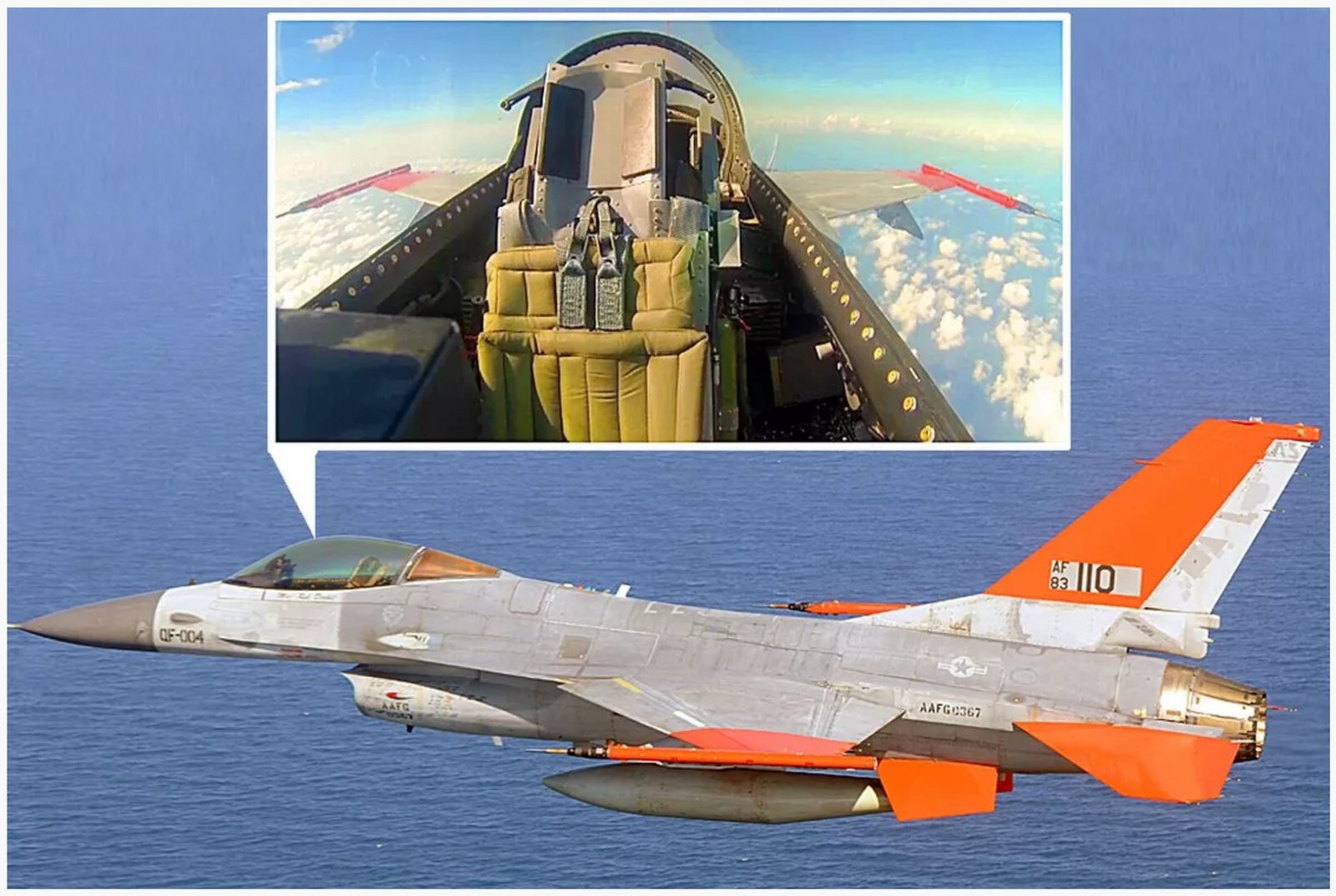
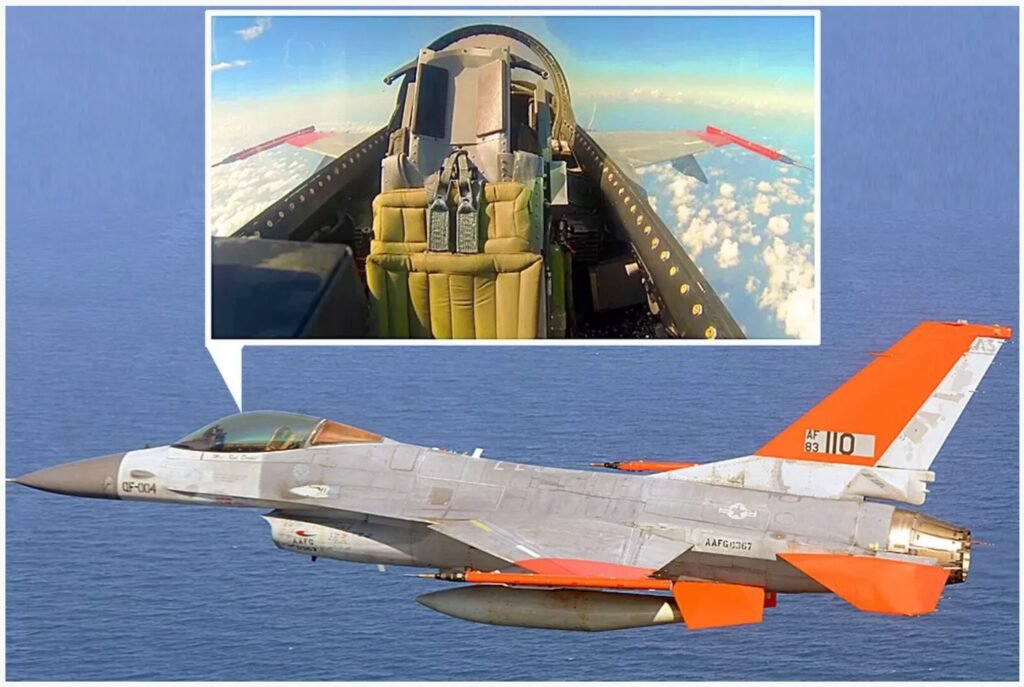
The reported value of the floated packages of 20 F16s for sale to the Philippines is at roughly $5.5 billion in current U.S. dollar terms. The extrapolated, estimated value of $22.5 to $27 billion lost each year from 2016 to 2022, on annual average, says it’s a multiple of 4 (four times) the upfront package value of the floated sale of 20 F16s to the Philippine military. For another perspective, it means thieves, the severely corrupt public officials and contractors would still have from $17 to $21.5 billion to pocket (steal), annually, from government coffers.
Before anyone raises a hypocritical voice, let me say I am much aware of the other pressing, urgent needs of the Filipinos and the country. For one, a boost in health care spending (as a percentage of the national budget) is long overdue with all its practical and long-term nation-building value, drastically improving the health profile of the millions of the poorest Filipinos, even the families of soldiers, and entire poor communities which are powder kegs for all sorts of societal and peace and order problems and even national instability. We lived, not only immersed in superficial level, among these people, so I know what I’m saying here. And to add, we are like local heroes in some instances of devastations caused by natural calamities in parts of the country, especially southern Philippines, having made great personal sacrifices to help people during and after these devastations, using our own personal meager resources and whatever earnings we would have from our work. Of course, we have hundreds if not thousands of photos and videos of these, over many years.
The Iraq and Afghanistan Experiences – 2 paragraphs below added 20Dec25. I always had this in mind but not typed as I rushed many of these articles here in this website.
Severe corruption is atrocious if in a relatively poor and insecure country. It’s not an abstract idea, and never benign regardless of the mainstream population having accepted it as a hard reality and they could not do anything about. Cynicism is widespread in very corrupt societies, but it’s never impossible and really permanent, as recent history from the Middle East, northern Africa and South Asia demonstrated.
ISIS, the great evil of a phenomenon, rose to power over a big swathe of territory not only because of socio-political and religious environments conducive for the movement to thrive. But it’s also in major part because of the severe corruption and resulting lack of common binding causes among the officials and soldiers of Iraq after the Americans left except for special forces and small number of soldiers and military bureaucrats. ISIS, driven by their radical version of religious beliefs, got inspired by early and rapid victories against organized government forces in the Middle East. Even before its rise, and spread across boundaries, the Iraqi military was beset by severe corruption that undermined its institutional and operations capabilities to wage war and win battles.
Afghanistan became a failed state, even with a trillion-dollar expense for the United States, and decades of direct engagement and participations in the government, I opine it’s mainly because of severe corruption too. When soldiers lose trust of their leaders and institutions, the Taliban type of force with its fanatical religious following, and battle-hardened fighters willing to die for their radical causes and beliefs — a highly motivated, one-in-spirit, fanatical personalities among Taliban fighters easily defeated government soldiers whose will to fight and mental endurance easily wore off. These are extreme examples, but I made my point.
How would the Philippines benefit from acquisition of advanced weapon systems and the floated Block 70/72 F16s?
It’s a big step towards a changed mindset. A recognition of hard and harsh reality in East and Southeast Asia, around Chinese Communist Party-controlled China, and this changing world since Russia’s attempted invasion of Ukraine and other recent conflicts that could have triggered wider regional wars and global disruptions on trade and political dynamics. And a challenge for required scaling up to minimum defense capability to this CCP-China behemoth using aggressive coercive economic and military tools, across realms including cyber. The Philippines still have poor capabilities for defense, though it’s now far more better-positioned and invested in the last few years especially during the Marcos administration that begun in mid-2022, but not without capabilities at all, and defense build up even from a very low starting base, and especially in accelerated pace, (or even more so because) is required for basic national survival and credibility in deterring further Chinese aggressive acts in both the South China Sea and the sea lane between north of the country and Taiwan in eastern Pacific Ocean.
That the country has closer mutual security agreements with the Western powers (which here and in our posts we actually refer to the United States, European countries, Australia, New Zealand, Japan, Taiwan and South Korea) is not a disincentive, but should be a catalyst, for accelerated pace of modernization and standalone defense capabilities build up. Security partnerships, close relationships with Western powers, are ready and convenient platforms to exploit to reach a minimum defense credibility sufficient to minimize CCP-China’s aggressive incursions in Philippine territory, bullying and complicates the calculus whenever the dictator and PLA of imperial China of the CCP calculates cost-benefits to its behavior and rogue acts in the South China and West Philippine seas.
We can expect to lose resources in the acquisition and maintenance, and operations of the fleet of F16s, if the country decides to buy these from Lockheed Martin. There is no zero-risk for anything transformational in this world, only acceptable level of risks associated with certain decisions. I can’t be philosophical in this issue of whether or not to acquire advanced fighter jets, or F16s, but let me just for this part. The attitude of leaders reflects in their decisions and behavior. To think big in this case is to shift to higher gear in our pursuit of national security. Moreover, savings from relative peace in southern Philippines, in terms of overall societal impact, add tens of billions in annual value in costs saved and added to the national budget. For this we thank the Western powers, U.S., Japan, Australia, E.U. and all for all the decades-long efforts to mitigate impact of internal conflicts and broker long-term peace that even as faced with challenges now still holds.
In 13 years, at 5.5% annual growth rate, it would have a GDP of U.S. $1 trillion. By that time, assuming a population growth rate of, say, .8%, per capita income would be roughly more than 150% of current nominal GDP per capita. But to factor in much improved investor confidence, foreign direct investments especially in light of slow but consistent and accelerating exodus of foreign manufacturers in China, that we hope to benefit from even in some trickles, and the fast-growing purchasing power and disposable incomes across Southeast Asia (thus inevitably benefiting the entire region especially this nation with the 2nd biggest market in terms of population), per capita GDP could go much higher than figures cited here predict. Dividends in spending for the right priorities in the development of the country can have a compounding, multiplier effect overall in the Philippine society. Partnerships and closer security ties between the country and major Western powers can yield more than much improved defensive capabilities, and could translate to broader economic and societal benefits. Better respectability in our defense capabilities could also translate to overall improved diplomatic clout and prestige.
I have not yet started with the pains, and new challenges, to CCP-China, the F16s in able hands of Philippine pilots would pose. Sure, these machines can down some Chinese over and under sea vessels and destroy components of Chinese military installations across the West and South China seas, in one-off or short-term conflict situations. On this, I relent to war planners the overall value of the war planes in a major conflict situation, or war, thinking about the Mutual Defense Treaty between the U.S. and the Philippines, and minor versions of such mutual security, defense agreements with other Western powers. At this threshold of conflict or war, in East Asia and or South China Sea, the Philippines can count on the strategic and operational-level all-out support of the U.S. and to some extent of some other allies depending on why, how and because of which acts of which country a conflict or war broke out.
President Trump and Defense Secretary Pete Hegseth
It’s clear that President Trump is a decisive and resolute leader of the mightiest military and economy in the world. His America First is not isolationalism. The sustained American support for Ukraine, and the lighting fast and almost magically successful Operation Midnight Hammer to destroy Iranian dual-use nuclear facilities and support facilities, demonstrate his grave concerns about nations, led by dictators, going rogue that disrupt relative regional and global stability and peace posing threats to core national interests of the United States and its major economic and military partner allies. I am also an early believer of U.S. Defense Secretary Hegseth, a Harvard-educated formier soldier who long advocated for greater attention and efforts to stem CCP-China’s hegemonic ambitions, in an all-government and all-front approach. At least in public pronouncements, he also re-assured paranoid dictator/s that unless they continue to pose active, clear and present dangers to the security of the United States, and the core national interests of the Americans and shared interests among allies and partners, that the Trump administration does not seek to change the status quo in East Asia (think Kim Jong-un too, but this a unique case) neither contain the continued economic rise of China or militarily dominate it in its own yard in East and Southeast Asia.
China is long been in frenzy to steal Western military and industrial secrets. Now what?
A more secured American homeland enables the United States to more decisively, effectively, potently, ably project hard (and also soft) power wherever and whenever in the world it is necessary in any given scenario. America First policy by President Trump establishes, catalyzes a much more effective deterrence versus rogue acts of rogue leaders igniting major conflicts and wars. This may be worrying for some war planners even among other Western powers, but its wisdom is proven by catalyzing ramped up, accelerated re-building of military capabilities across the Western world, in all jolting the Western military-industrial complexes in major (even smaller but affluent, technologically advanced ones) nations of Europe and Asia to awaken, expand, accelerate research and production capabilities and partnerships with leading private-sector leaders and innovators in almost every field and industry.
Who does not want to dream of a ideal scenarios, of a utopian world? But in our waking hours, there are simply harsh and hard realities to contend with, to deal with, to be very much prepared for. Bad state and non-state actors exist, their capabilities are also proliferating in this modern, more and more AI-driven and interconnected and interdependent world. Very bad guys and groups do exist, their beliefs and dogmas, their illusions, their very lack of sound reasoning capability, the absence of morality and conscience in their persons, their sheer malicious intent dictate what rogue and violent, disruptive acts they feel like doing next. These kinds of potentially violent, organized-crime scheming personalities, so very arrogant, so subtly but forcefully intent on eliminating what they perceive as threats to their bad acts, have been trying to further victimize us after we fell victims to some simple crimes, recently. On this is our next post.
For years, in the most difficult of circumstances, locally and nationally, we broadly but silently campaigned to educate, equip civil society and government leaders with the right and relevant facts and information. This was during a period of broad ignorance to geopolitical realities in this world, 2016-2022, before and after that too (to some extent) with the kind of dangerously simplistic and using false reasoning arising partly from parochial thinking informing inputs of advisers to those who decide on national policies and direction of this country’s foreign policy and stand on national security issues. We of course influenced a good number of civil society leaders and public officials, so many of them have lost their beliefs in our version of democracy and idealism to cynicism.
We are not armchair analysts, we know whereof we speak of nuances in issues, local and national. We have been deeply immersed across local cultures, geographic and socio-political realities in this country. We have an unmatched exposure to so many of these across the country. And of course, we did a number of original research in creative ways. In a country where millions of young people only obsess with landing good jobs outside of the country, and we can’t blame them, nation-building is not an easy thing to participate in private capacity.
Where countless people flaunt where a family member or relative resides or work in affluent countries, signalling economic and social status, sense of civic identity is an impossible task especially amidst tribalistic thinking borne out of survival needs of poor people. This is the socio-political background where we accomplished the impossible, by simply being concerned and caring to act. The Philippine society, some of the local societies, are so beset by so grave of kinds of corrupt practices (even in private sectors) and as I said the utter lack of sense of civic duty even among local officials (that it should have been obligatory to them as part of their sworn duties) that you can’t imagine how even local forces set out to fight us as if we’re some enemies, more than undesirable temporary residents. Of course far more people actively make efforts to maintain friendships with us. Oh, I have veered far away from the original topic, title of this article, but thank you for bearing with me. We have many urgent concerns to deal with now, and since months ago, and been under some kind of distress, and so here, this kind of wandering of my mind.
My position is: Defense Secretary Gilbert Teodoro, with his exceptional academic and life credentials, has the wisdom, the data and all kinds of assessments and reports for supposed national priorities, and is being practical in the stand he is taking, at least publicly. I don’t think he has negated any possibilities as to this component of the country’s accelerated modernization and defense capability-building drive. We support him, President Marcos, and this administration overall, to continue in the current track as regards political stability, economic policies and national security. We also hope for better deals and lower package costs for advanced weapon systems for the country’s military, in all of its acquisition plans from all other floated providers among Western powers. This however does not extend to blind support of local and regional officials, both elected and appointed. The problems in the efforts to pursue our country’s core national interests are more deeply and more broadly at this local levels of governance, where corruption in some areas and among some kinds of officials are so entrenched, more pervasive, more massive and more blatant in some parts of the country, thus depriving, denying, stealing opportunities to intensify nation-building and pursuit of national security across fronts including in the country’s military capabilities.
Updated 12Dec25
Is KAI KF-21 Boramae, a South Korean multi-role fighter jet with “semi-stealth” tech, if for its acquisition and maintenance costs at least on face value on offer, that’s just a fraction of the F16 Block 70/72 in whatever customized cofiguration, be a good alternative if it is indeed as per the needs of the Philippine military and national security? I have very mixed feelings, and take note I’m not really into the technical details, and use cases for the Philippines. But a matured system versus a new weapon and machine eco-system if only because of affodability? An entire broad-basis source of pilot knowhow, troubleshooting on operational and flying matters? Are overall sustainment and operational costs to prove to be as projected on paper for the KF-21?
Even with the Block III of the future, all stealth on paper, I can’t easily subscribe to the idea. However, I also know that there are production bottlenecks in the U.S. aerospace and defense industry, with companies grappling with delivery schedules, and I don’t know if for the only rationale of earlier and guaranteed on-time delivery of KF-21 is the factor, with in mind the likelihood of an invasion of Taiwan by CCP-China in, say, next 4-5 years, is decisive. It is an impressive and extra-ordinary achievemnt for South Korea, existentially threatened by North Korean communist leaders, to develop and produce this kind of jet, as is the case with Gripen of Sweden.
A capable fighter jet would empower the Philippine military with effective last-resort defense and calibrated retaliation against many targets in China’s military installations in the South China and West Philippine seas, China’s revolving marine arsenal in the seas around the Philippines, and other kinds of targets, in the event of a limited conflict. And I can’t imagine how that would play out in a full battle or war with fulll mobilizations from China which would certainly draw the U.S. military and others into full and limited engagements (Ukraine experience) and support (intelligence, targeting and weapons). I’m not well-informed on matters about this scenario. But for sure, this also improves the country’s standing and utility (to be pragmatic, thus greater respect and support among war planners and politicians in the U.S.) in the overall U.S.-led strategic deterrence against China in the Western Pacific and South China and West Philippine seas, and in case of an attempted invasion of Taiwan by CCP-China.
I am by principle and practice into some early adoption of new technologies and systems, but not go with the bandwagon among the earliest adoptors. I believe in mature and stable, proven systems, unless cutting-edge is guaranteed by multi-institutional thorough tests and quality-control systems in a technologically advanced and militarily powerful countries with a long history of fighting wars like Israel, the Europen countries, the U.S. and Japan.
I have gone so far out of topic here, typical of me, but my main point, of lamenting about the potential of the Philippines far from being realized, because of the lingering severe corruption, is my main argument here. The shortage of school classrooms in the Philippines, expected to linger for another decade and longer, at almost 200,000, would be solved if only a quarter of public funds being stolen every year is instead allocated to this. At $150,000 for every village (smallest political unit in the Philippines, more than 40,000) for just a single year, would solve a host of long-term problems afflicting millions of poor families, from access to clean water, basic health facilities, hardened shelters and facilities (disaster-mitigation), programs for the youth (we spent our small fortune for this cause, this year, 3 of our beneficiaries who were out of school youth now back in school, and we also helped save 1 life), health education and basic child care programs. Imagine, if you add up all of these that I stated here using basic crude arithmetic, $22 to 27 billion would, if witheld from thieves, be able to fund all of these, and the 12 F16 Block 70/72 in any customized configuration.
